
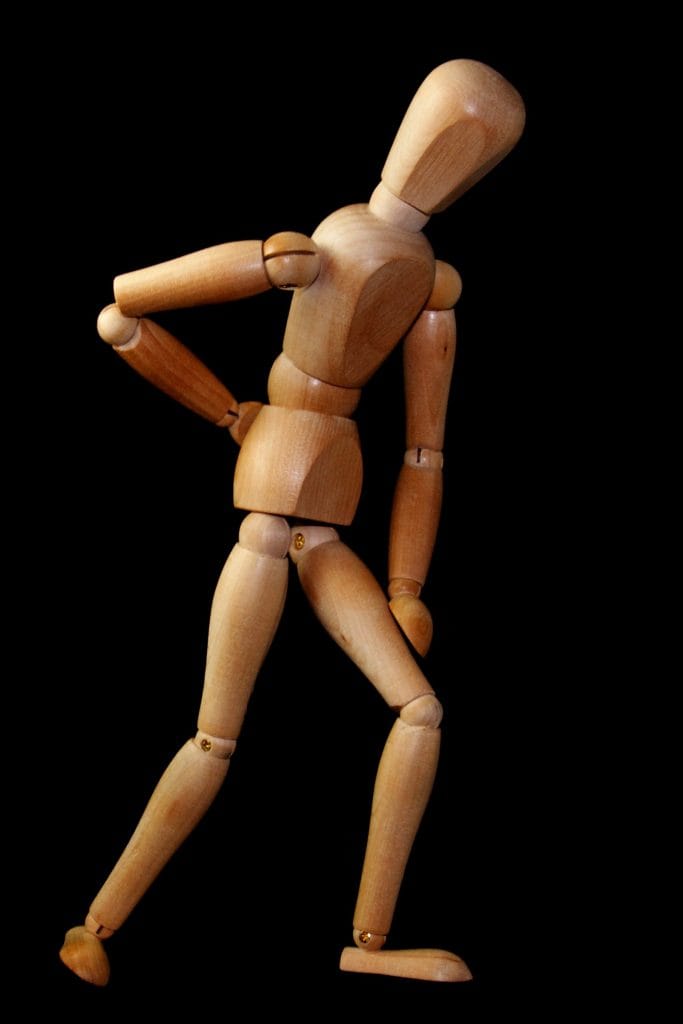
Back pain is something many of us experience at some point.
It might start after lifting something heavy over the weekend, sitting at a desk for too long, taking a long flight, pushing too hard at the gym, or simply from everyday activities.
Sometimes the pain settles with some rest and a little time. But for some people, it keeps coming back or starts affecting sleep, movement and everyday life. That’s when you may want to consider some extra help.
So, can acupuncture help?[1]
Common Causes of Back Pain
There can be many reasons for back pain, including:
- Muscle strain or overuse
- Sitting or standing for long periods, or poor posture
- Exercise or sports injuries
- Repetitive movements
- Joint stiffness
- Disc or nerve-related problems
- Stress and muscle tension
- Changes that come with age
Sometimes there isn’t just one cause. A busy week, poor sleep, stress, sitting too much and physical activity can all add up and contribute to the problem.
Different Types of Back Pain
Back pain can feel quite different from person to person.[2]
- Acute back pain can come on suddenly after lifting, twisting or exercise. It may feel sharp, tight or stiff.
- Long-term or recurring back pain can gradually become part of everyday life and start affecting sleep, work and movement.
- Muscular back pain often feels tight, sore or achy. It can be related to overuse, exercise or sitting for too long.
- Nerve-related pain can sometimes travel from the back into the buttock, leg or foot. You may also experience tingling or numbness.
Because everyone’s back pain is different, we don’t treat every case in exactly the same way.
What Does TCM Think About Back Pain?
Traditional Chinese Medicine (TCM) looks at back pain from a slightly different perspective.
We look at how Qi (氣) and Blood (血) move through the body and along the meridians.
When the normal flow is disrupted, it may contribute to pain, tightness or stiffness. This is reflected in the traditional TCM idea:
“Where there is blockage, there is pain.”
From a TCM perspective, back pain may be associated with different patterns, such as Qi and Blood stagnation, Cold and Damp, Qi deficiency, or Kidney deficiency.
For example, a recent injury may be more related to Qi and Blood stagnation, while long-term or recurring lower back pain may involve a deficiency pattern.
This is why two people with similar back pain may receive quite different acupuncture treatments.
How Can Acupuncture Help?[1]
Acupuncture uses very fine needles placed at carefully selected acupuncture points.
The points are not always placed directly where the pain is. Depending on your symptoms and TCM assessment, points may also be selected on the legs, arms or other areas of the body.
From a modern perspective, acupuncture may influence the nervous system and the body’s pain response. For some people, this may help reduce pain and muscle tension and make movement easier.
At David Lee Acupuncture, we may also combine acupuncture with other TCM treatments, such as Cupping or Moxibustion, depending on your condition.
What Can You Expect During Treatment?
At your first visit, we will talk about your pain — when it started, what makes it better or worse, your daily activities, and any previous injuries or treatment.
We may also look at your tongue and check your pulse as part of the TCM assessment.
The aim is to understand not only where the pain is, but also what may be contributing to the problem.
Once we have assessed your condition, fine needles are inserted into selected acupuncture points. The needles are very thin, and the treatment should not be painful. You may feel a small prick, warmth, heaviness or mild tingling.
Depending on your condition, we may also use cupping or moxibustion as part of the treatment.
What Improvement Can You Expect?
Everyone responds differently to acupuncture.
Some people notice a change straight after the first treatment, such as:[3][4]
- Less pain
- Less muscle tightness
- Easier movement
- Better sleep
- Feeling more relaxed
For others, the improvement is more gradual and may become noticeable over the next 1–2 days.
Some recent problems may improve significantly after one treatment, while long-standing or recurring problems may require several treatments.
We don’t only look at whether the pain has gone. We also look at whether you can move more easily, sleep better, sit more comfortably or get back to your normal activities.
How Many Treatments Will You Need?
There is no fixed number of treatments.
A recent problem may improve relatively quickly, while long-standing or recurring back pain may take more time.
We assess your response as we go and adjust the treatment accordingly.
Our aim is simple — to help you feel better than when you walked through the door.
Looking at the Whole Person
Back pain isn’t always just about the back.
Sleep, stress, posture, movement, work and exercise can all play a part.
In David Lee Acupuncture, we take a personalized approach, looking at both your symptoms and your overall condition.
If back pain is affecting your everyday life, we may be one option to consider as part of your approach to managing it.
Ready to experience the benefits of acupuncture?
Book An Appointment Today
[1]Jin-Feng Huang(2021)Can Acupuncture Improve Chronic Spinal Pain? A Systematic Review and Meta-Analysis
[2]Roger Chou 1, Amir Qaseem, Vincenza Snow, Donald Casey, (2007). Diagnosis and treatment of low back pain: a joint clinical practice guideline from the American College of Physicians and the American Pain Society
[3]Chou R, Deyo R, Friedly J, et al. (2017). Nonpharmacologic Therapies for Low Back Pain: A Systematic Review for an American College of Physicians Clinical Practice Guideline
[4]Vickers AJ, Vertosick EA, Lewith G, et al. (2018). Acupuncture for Chronic Pain: Update of an Individual Patient Data Meta-Analysis. The Journal of Pain